Showing posts with label Protest Songs. Show all posts

Monday, May 26, 2025

“Run Like Hell”: When Paranoia Got a Backbeat (and a Swagger)


There’s a moment, somewhere between the fourth and fifth “run,” when Pink Floyd’s “Run Like Hell” stops being a rock song and starts sounding like a fascist workout tape for the emotionally unhinged. And that’s by design. Released in 1980 from the band’s paranoiac magnum opus The Wall, this four-minute panic attack in D minor still makes your skin crawl—and not just because of the dystopian lyrics. It’s because, four decades later, the world seems to have caught up to its message.

If Another Brick in the Wall was the classroom rebellion, then Run Like Hell is the moment the school gets firebombed by the principal. And we, the citizens of whatever this flaming circus of a nation has become, are now extras in the music video.

The Sound of Stomping Boots and Sweaty Paranoia

Musically, Run Like Hell is the dirtiest, most danceable goose-step you’ve ever been threatened by. The song opens with David Gilmour’s sinister drop-D guitar, palm-muted like a heartbeat you’re trying not to hear. It’s drenched in delay, a series of echoing rhythmic punches that form a sort of militaristic groove. Imagine if a jackboot had a funky cousin.

The track hangs on an E minor to Fmaj7sus2 progression that feels like a nervous breakdown set to a metronome. Synth howls from Richard Wright stalk in from the shadows, while Roger Waters pants, shrieks, and rages like a fascist aerobic instructor who’s had way too much mescaline. Drummer Nick Mason holds it all together like a bureaucrat pretending the riot outside is just a Tuesday.

And yes, that is laughter you hear. Not the fun kind. The kind you hear in a fascist’s wet dream.

The Last Supper of 1970s Floyd

This was the last time the four classic Floydians, Waters, Gilmour, Wright, and Mason, played together on an original song. You can almost hear them grinding their molars in separate isolation booths. Gilmour brought the musical skeleton. Waters layered it with the manifesto. Wright delivered a synth solo like the ghost of Orwell’s 1984 learning jazz theory. Mason did what he does best: exist, competently, in the back.

Bob Ezrin, producer and chaos technician, wrangled it all together. Even session guitarist Lee Ritenour was summoned to “beef up” the sound, as if the musical equivalent of a police raid needed more menace.

Born of Walls, Pig Balloons, and Roger Waters’ Deep Daddy Issues

The Wall isn’t an album; it’s a 95-minute psychotic break with a killer budget. Pink, the anti-hero, loses his wife, his mind, and finally his humanity. Run Like Hell appears in the third act, when Pink has entirely gone bananas and imagines himself as a fascist dictator turning his concert into a hate rally.

On film, it’s even worse. Neo-Nazis assault an interracial couple while Waters sings “You better run”—a line that in most contexts means “you’re in danger,” but here means “you’re the enemy.” Alan Parker, the film’s director, cast real skinheads who continued to break stuff after he yelled “Cut.” Apparently, fascism lends itself to method acting.

Instructions for Authoritarian Cosplay

Let’s look at the lyrics:


“You better make your face up with your favorite disguise / With your button-down lips and your roller-blind eyes…”


Translation: You’ve buried your humanity. Now accessorize it.


“If you’re taking your girlfriend out tonight / You’d better park the car well out of sight…”


Because this regime doesn’t just monitor your protests—it’s checking your backseat too.


“They’re gonna send you back to mother in a cardboard box.”


So much for due process. Welcome to the Kill Box Democracy™.


Waters wasn’t being metaphorical. He was telling you how fascism works: by turning you into a monster while convincing you that everyone else is the threat.

What Happens When the Audience Becomes the Mob

The genius of “Run Like Hell” isn’t in its chords or its tempo. It’s in its complicity. The audience is part of the problem. By the time the crowd starts chanting “Hammer! Hammer!”—the symbolic weapon of Pink’s regime—you realize the crowd’s been hypnotized into obedience. No different than cheering at a rally while someone burns a Constitution onstage.

It’s a song about transformation. Not the good kind. The Goebbels kind.

From Stadiums to Statehouses

“Run Like Hell” has aged like a horror film that just came true. In an era when the American right seems one bad tweet away from replacing the national bird with a flying red hat, Waters’ vision no longer feels like fiction. The hammers are still metaphorical—for now—but the bile, the fear, the running? All very real.

Under Trump 2.0—the reboot, the revenge tour, whatever this fever dream is becoming—we’ve got crowds cheering purges, enemies lists written in PowerPoint, and chants of retribution echoing off Capitol walls. “Run Like Hell” was a warning. America responded by asking, “Can we get that in campaign merch?”

Get Your Shoes, It’s Time to Run Again

So what do we do with a song like “Run Like Hell”? We play it loud. We recall that it was written before the internet made disinformation a widespread phenomenon. We use it as a mirror, even when we don’t like the reflection.

Because sometimes rock and roll doesn’t liberate you. Sometimes it holds up a megaphone and screams, “This is how the world ends—not with a whimper, but with a drum fill and a chant.”

So, yeah. Run.

Not because you’re guilty. But because the fascists just turned on the lights, and they don’t need an excuse.

#RunLikeHell #PinkFloyd #TheWall #RogerWaters #DavidGilmour #FascistAnthem #SoundtrackToParanoia #DropDTuning #ProgRockPolitics #DystopiaOnVinyl #Americain2025 #MusicAsWarning #1979Meets2025


Monday, May 19, 2025

“Dusty Old Dust”: Woody Guthrie’s Goodbye Kiss to Civilization (If You Can Call It That)

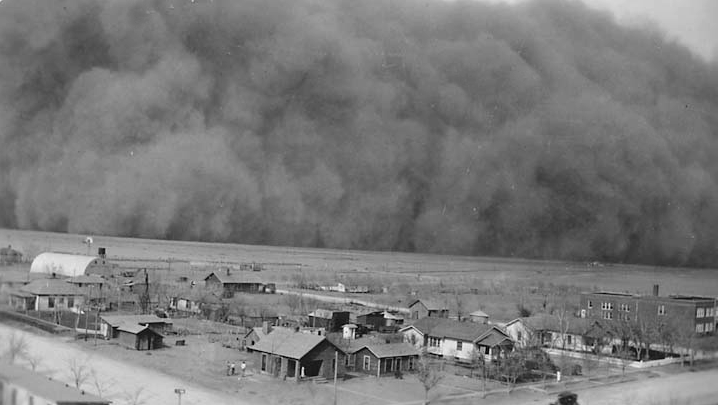
Before John Lennon imagined no possessions and Bob Dylan started blowing in the wind, there was Woody Guthrie—a man with a guitar that said “This Machine Kills Fascists” and a voice that sounded like it had just crawled out of a dust-choked saloon in Amarillo. And of all the songs Guthrie strummed into the Great American Songbook, none is quite so gallows-cheerful, so dust-swept and back-slappingly bleak, as Dusty Old Dust, better known by its folksier tagline, “So Long, It’s Been Good to Know Yuh.”

A Farewell in 4/4 with a Side of Sand

Musically, the song is deceptively simple. It’s written in a major key (usually G or C, depending on whether Woody tuned up or was just guessing), driven by a basic I-IV-V chord progression that your average porch-bound uncle can play after two beers and five minutes with a chord chart.

There’s no orchestration, no bridge, no big finale—just that lilting, looping melody that circles back like a tumbleweed you thought you got rid of. The rhythm bounces like a two-step funeral dirge, carried mainly by Guthrie’s acoustic guitar and nasal twang, which somehow cuts through dust storms and radio static alike.

Think of it as the musical equivalent of a campfire joke that ends with a reminder that everything you know is blowing away.

One Man, One Dust Bowl, One Damn Guitar

Players? Let’s not get fancy. This was Guthrie alone, or occasionally backed up by the Almanac Singers (Pete Seeger, Millard Lampell, Lee Hays, etc.), depending on the recording. No horns, no session musicians, no backup dancers from Tulsa.

Just Woody, possibly with a flea-bitten harmonica and a microphone made out of two tin cans and a prairie dog. Later recordings may include some rudimentary group vocals, usually male voices harmonizing like they were about to unionize a lumber mill.

Origins: From Black Blizzards to Billboard

The song was born in 1935, when the sky turned black and Kansas looked like Mordor. Guthrie was living in Pampa, Texas, right in the heart of the Dust Bowl, and wrote the song in the wake of what was possibly the worst dust storm in U.S. history. Think of it as a folk song written on the edge of the apocalypse, sung by people who were too tired to scream.

It was first recorded in the early 1940s, became a staple in Guthrie’s live sets, and then really took off in the public consciousness during WWII, when Woody tweaked the lyrics to send off GIs heading to Europe with a wink and a whistle. The man could weaponize nostalgia better than the Pentagon.

A Dust Bowl Ballad with a Punchline

Let’s not pretend Guthrie was writing abstract poetry. These lyrics are direct, funny, and sneakily tragic. One verse jokes about a man trying to court a girl but being interrupted by a dust storm—romance thwarted by climate collapse. Another verse pokes at the church, noting that when the dust hit, folks prayed so hard they forgot how broke they were.

The real genius lies in the chorus:


So long, it’s been good to know yuh…

It’s a phrase you say to your neighbor, your town, your house, your entire godforsaken way of life as it’s being swallowed by sand and foreclosure. It’s a punchline hiding a panic attack. There’s no moralizing here—just a sardonic acceptance that the world is ending, and by the way, don’t let the door hit you on the way out, Oklahoma.

Goodbye, America—It Was Nice Until It Wasn’t

At its core, Dusty Old Dust is Guthrie’s sardonic farewell to a place that failed its people. It’s not just about environmental disaster—it’s about the institutional collapse, the human displacement, and the bone-dry irony of suffering wrapped in patriotism.

This song isn’t mourning the land—it’s mourning the illusion that the land was ever in our control. It’s the “we told you so” anthem of a generation who watched soil, dreams, and federal promises all turn to grit in the same windstorm.

The Folk Song That Wouldn’t Shut Up

Dusty Old Dust has had more lives than a feral cat. Pete Seeger recorded it, the Weavers harmonized it, and Bob Dylan studied it like scripture. It’s been covered in protests, classrooms, nursing homes, and picket lines. The song even mutated into a patriotic send-off during WWII, proving that Guthrie’s sardonic wit could play both sides of the American coin.

In folk music circles, it became a template for how to say everything and nothing at once—how to grin while the house is burning. It also helped define the protest-folk genre: personal, political, painfully relatable.

So Long, It’s Still Good to Know Yuh

In the end, Dusty Old Dust isn’t just a song—it’s a resignation letter from a generation choking on the lies of progress and the dust of overworked land. Guthrie turns tragedy into tune, sarcasm into scripture. It’s the ballad of the everyman forced to pack up, sing a farewell, and keep walking into the next disaster.

And yet, weirdly… it makes you feel okay about it. Like maybe if we all go down together, we can at least harmonize on the way out.

#DustBowlBlues #WoodyDidItFirst #SoLongItsBeenGoodToKnowYuh #FolkloreWithCalluses #PrairieSarcasm #ThisMachineKillsFascists #GoodbyeToAllThat


“Sweet Talkin’ Woman”: Love in a Purple Vinyl Fever Dream

There are love songs. There are breakup songs. And then there’s “Sweet Talkin’ Woman,” a tune so drenched in disco strings and desperation t...